
Field Guide to Birds of North America: A Comprehensive Plan
Birds of the World, a groundbreaking resource, consolidates scholarly insights from esteemed ornithological publications like Birds of North America and Neotropical Birds.

Birdwatching, or birding, has blossomed into a remarkably popular pastime across North America, captivating individuals of all ages and backgrounds. The continent’s diverse ecosystems – from boreal forests to arid deserts and expansive wetlands – support an astonishing array of avian life, presenting endless opportunities for observation and discovery. This rich biodiversity fuels the enthusiasm of seasoned ornithologists and curious beginners alike.
The allure of birdwatching lies in its accessibility; it requires minimal equipment – a pair of binoculars is often sufficient – and can be enjoyed in virtually any environment. Whether exploring local parks, embarking on dedicated birding expeditions, or simply observing feathered visitors to your backyard, the experience offers a unique connection with the natural world.
Furthermore, participation in citizen science initiatives, like those facilitated by the Cornell Lab of Ornithology and the Audubon Society, allows birdwatchers to contribute valuable data to ongoing research and conservation efforts, amplifying the positive impact of this rewarding hobby.
II. Why Use a Field Guide?
Navigating the vast diversity of North American birdlife necessitates a reliable tool for identification – and that’s precisely where field guides prove invaluable. Encountering an unfamiliar bird can be both exciting and perplexing; a field guide transforms this uncertainty into an opportunity for learning and appreciation.
These guides provide a structured approach to identification, presenting key characteristics such as plumage patterns, size, shape, and behavioral traits in a readily accessible format. Detailed illustrations or photographs, coupled with concise species accounts, empower birders to systematically narrow down possibilities and arrive at accurate identifications.
Beyond simple identification, field guides enhance the overall birdwatching experience by offering insights into a species’ habitat, range, vocalizations, and conservation status. They are essential companions for both novice and experienced birders, fostering a deeper understanding and connection with the avian world.
III. Understanding Bird Identification Basics
Successful bird identification hinges on a systematic approach, moving beyond simply noting color. Begin by observing the bird’s overall size and shape – is it compact or slender, long-legged or short-legged? Pay close attention to key features like bill shape, which often correlates with diet, and the pattern of plumage, noting distinct markings like wing bars or eye stripes.
Context is crucial; consider the bird’s habitat. Is it in a forest, grassland, or wetland? Knowing the typical range of a species significantly narrows down possibilities. Observe its behavior – how does it forage, perch, or fly? Vocalizations, including songs and calls, are often definitive identification clues.
Combining these observations – physical characteristics, habitat, range, and behavior – creates a comprehensive profile, leading to accurate identification and a rewarding birding experience.

III.A. Key Identification Features
Precise observation of key features forms the cornerstone of bird identification. Bill shape is paramount – hooked for raptors, long and probing for shorebirds, or conical for seed-eaters. Plumage details, beyond basic color, are vital; note wing bars, eye rings, throat patches, and the presence of streaks or spots.
Leg and foot structure also provide clues. Webbed feet indicate waterfowl, while strong talons signify birds of prey. Tail shape varies greatly – forked in swallows, rounded in robins, and pointed in hawks. Size comparison is helpful; noting whether a bird is larger or smaller than a common species like a robin provides scale.
Carefully documenting these features, alongside habitat and behavior, builds a strong foundation for accurate species determination.
III.B. Importance of Habitat and Range
Understanding a bird’s preferred habitat dramatically narrows down identification possibilities. Is the bird observed in a dense forest, open grassland, marshland, or along the coastline? Certain species are intrinsically linked to specific environments. Equally crucial is knowing a bird’s geographic range – where it’s typically found at a given time of year.
Range maps within field guides are invaluable tools, illustrating breeding, wintering, and migratory routes. A bird seen outside its expected range is noteworthy and may represent a rare vagrant. Considering seasonal changes is also vital; many birds migrate, altering their distribution throughout the year.
Combining habitat assessment with range information significantly increases identification accuracy, eliminating unlikely species from consideration.
III.C. Behavioral Clues
Observing a bird’s behavior provides critical clues for identification. How does it forage for food? Does it glean insects from leaves, probe for invertebrates in mud, or hawk insects mid-air? Note its method of flight – is it direct, undulating, or soaring? Pay attention to its social behavior; is it solitary, in pairs, or flocking with others?
Specific behaviors are characteristic of certain species or families. Woodpeckers, for example, exhibit a distinctive drumming pattern, while flycatchers sally forth to catch insects. Vocalizations, though covered separately, are also a behavioral trait.
Careful observation of these behavioral nuances, combined with physical characteristics, greatly enhances the accuracy of bird identification in the field.
IV. Major Bird Families of North America
North America boasts an incredibly diverse avian population, organized into numerous families. Understanding these groupings simplifies identification. Passerines, or perching birds, represent the largest group, including warblers, sparrows, and finches – characterized by their foot structure adapted for grasping branches.
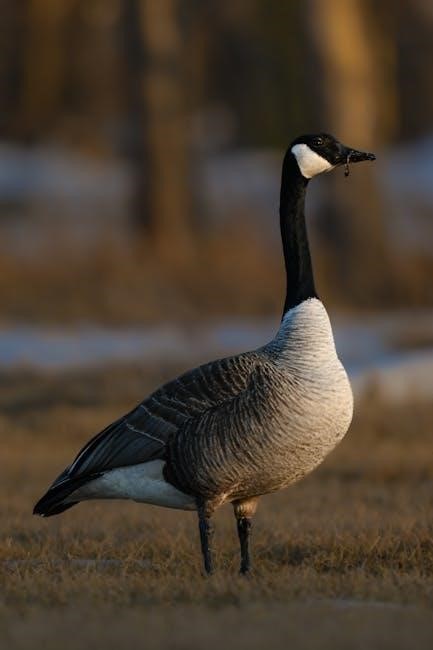
Raptors, birds of prey like hawks, eagles, and owls, are distinguished by their sharp talons and hooked beaks, designed for hunting. Waterfowl, encompassing ducks, geese, and swans, are adapted for aquatic life with webbed feet and waterproof plumage.
Shorebirds, such as sandpipers and plovers, frequent coastal areas, probing for invertebrates in mudflats. Finally, Woodpeckers and their allies, like nuthatches and creepers, are known for their ability to climb trees and excavate wood. Recognizing these families is a foundational step in bird identification.
IV.A. Passerines (Perching Birds)
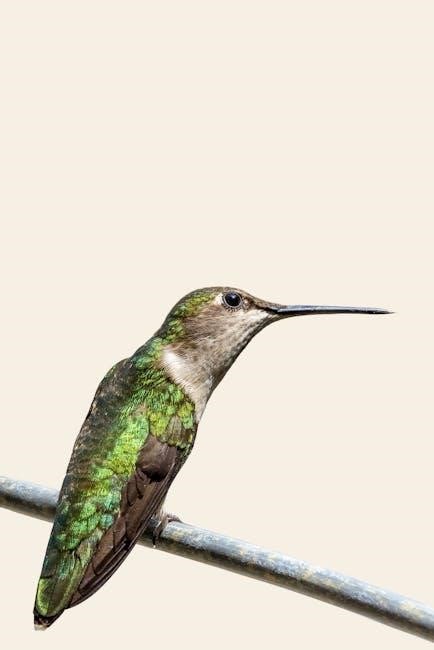
Passerines, comprising over half of all bird species, dominate North American landscapes. Their defining characteristic is a foot arrangement with three toes pointing forward and one backward – ideal for perching. This vast order includes diverse families like warblers, celebrated for their vibrant plumage and complex songs, and sparrows, often subtly colored but abundant in various habitats.
Finches, known for their conical beaks adapted for seed-eating, and thrushes, recognized by their melodious calls, also fall within this group. Identifying passerines often relies on subtle plumage details, song patterns, and behavioral observations. Careful attention to these features is crucial, given the sheer number of species.

Understanding seasonal variations in plumage, particularly during breeding season, further aids accurate identification within this incredibly diverse bird family.

IV.B. Raptors (Birds of Prey)
Raptors, or birds of prey, represent a powerful and iconic group within North American ornithology. Characterized by their hooked beaks, sharp talons, and keen eyesight, they are apex predators. This family encompasses diverse species, including hawks, known for their soaring flight and varied hunting strategies, and eagles, symbols of strength and majesty.
Falcons, renowned for their incredible speed, and owls, masters of silent flight and nocturnal hunting, also belong to this order. Identifying raptors often involves noting their size, silhouette, wing shape, and flight patterns. Observing hunting behavior – whether they soar, dive, or perch-and-wait – provides valuable clues.
Plumage variations, especially between adults and juveniles, are also important identification markers within the raptor family.
IV.C. Waterfowl (Ducks, Geese, and Swans)
Waterfowl, encompassing ducks, geese, and swans, are a prominent feature of North American wetlands and waterways. These birds are typically characterized by their webbed feet, flattened bills adapted for filtering food, and waterproof plumage. Identifying waterfowl can be challenging due to seasonal variations in plumage and the sheer number of species.
Ducks exhibit a wide range of sizes and feeding strategies, from dabbling ducks that feed at the surface to diving ducks that submerge for vegetation and invertebrates. Geese are generally larger and often graze on land, while swans are the largest waterfowl, known for their elegant necks and graceful swimming.
Key identification features include bill shape, body size, wing patterns, and distinctive vocalizations.
IV.D. Shorebirds (Sandpipers, Plovers, and Others)
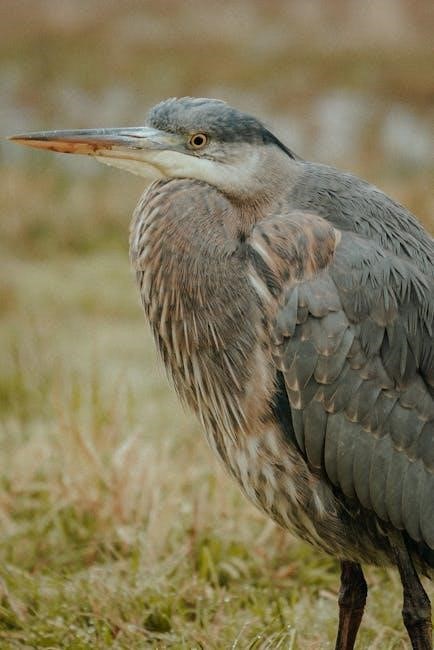
Shorebirds, including sandpipers, plovers, and others, are a diverse group of birds intimately tied to coastal and wetland habitats. They are typically characterized by their long legs, slender bills, and preference for foraging along shorelines.
Identifying shorebirds presents a significant challenge, even for experienced birders, due to subtle plumage differences, especially in non-breeding plumage. Many species exhibit similar appearances, making careful observation of key features crucial. Variations in bill length and shape, leg color, and body size are vital clues.
Habitat is also key; some prefer sandy beaches, while others frequent mudflats or rocky shores. Observing their foraging behavior – how they probe or run – can also aid identification. Vocalizations, though often subtle, can provide further confirmation.
IV.E. Woodpeckers and Allies

Woodpeckers and their allies, including flickers and sapsuckers, are instantly recognizable birds adapted for climbing trees and excavating wood. They possess strong bills, stiff tail feathers for support, and specialized tongues for extracting insects.
Field identification relies heavily on plumage patterns – the combination of black, white, and red is common, but varies significantly between species. Note the size and shape of the bill, as it reflects their feeding habits. Flickers, for example, have longer, slightly curved bills for probing the ground.
Habitat also provides clues; some woodpeckers prefer forests, while others inhabit woodlands or even urban areas. Listen for their distinctive drumming, used for communication and territory defense. Observing their foraging techniques – whether they peck, excavate, or glean – aids in accurate identification.
V. Essential Components of a Field Guide
A comprehensive field guide to North American birds isn’t merely a collection of pictures; it’s a carefully constructed tool for identification. Key elements include detailed illustrations or high-quality photographs showcasing plumage variations – male, female, breeding, and non-breeding. Accurate range maps are crucial, illustrating where a species is typically found during different seasons.
Species accounts provide in-depth descriptions of physical characteristics, habitat preferences, and behavioral traits. Pay attention to size comparisons; is the bird robin-sized or sparrow-sized? Vocalization descriptions, often including sonograms, are vital, as bird songs are often the first clue to identification.
Effective guides also highlight similar species and point out key distinguishing features, preventing misidentification. A good index and glossary further enhance usability, making birding more accessible and rewarding.
V.A. Illustrations vs. Photographs
The debate between illustrations and photographs in field guides is longstanding. Illustrations, traditionally favored, allow artists to emphasize key identification features, depicting a “typical” individual and showcasing subtle plumage details often missed in variable photographs.
Photographs offer realism, displaying birds in their natural habitats and demonstrating plumage variations due to age, sex, and lighting conditions. However, photographic quality can vary significantly, and a poorly lit or awkwardly posed bird can be difficult to identify.
Modern field guides often blend both approaches, utilizing illustrations for overall species depictions and supplementing them with carefully selected photographs illustrating variations; Ultimately, the best approach depends on individual preference and the specific guide’s quality.
V.B. Range Maps and Their Interpretation
Range maps are crucial components of any effective field guide, visually representing a species’ geographic distribution. Understanding how to interpret these maps is essential for accurate identification. Maps typically depict breeding range, wintering range, and migratory routes, often using different colors or patterns.
It’s important to remember that range maps are generalizations; bird distributions can fluctuate due to environmental changes and vagrant individuals may occur outside the depicted range; Maps indicating “resident” status signify year-round presence, while those showing migratory patterns illustrate seasonal movements.
Pay attention to map details like shading indicating density and arrows showing migration direction. Combining range map information with observed habitat and date significantly improves identification accuracy.
V.C. Species Accounts: Detailed Descriptions
Species accounts form the core of any comprehensive field guide, providing in-depth information for each bird species. These accounts typically begin with a concise overview, followed by detailed descriptions of adult, juvenile, and seasonal plumage variations. Careful attention is given to distinguishing features, noting subtle differences crucial for identification.
Beyond plumage, accounts detail size, shape, and key structural characteristics. Information on habitat preferences, typical behavior, and diet is also included. Many guides incorporate notes on similar species, highlighting critical distinctions to avoid confusion.
Modern accounts often include data on conservation status and population trends, offering a broader understanding of the species’ ecological role. Thorough species accounts empower birders with the knowledge needed for confident identification.
V.D. Vocalizations and Songs
Bird vocalizations are paramount for identification, often more reliable than visual cues, especially in dense foliage. Field guides increasingly dedicate significant space to describing songs, calls, and other vocalizations, utilizing onomatopoeic representations – though these can be subjective and vary regionally.
Modern guides often include sonograms, visual representations of sound frequencies, offering a more precise method for learning and matching vocalizations. Descriptions detail the song’s structure, tempo, and typical context, such as attracting mates or defending territory.
Understanding regional dialects and individual variations is crucial. Access to online audio recordings, complementing the guide’s descriptions, greatly enhances learning. Mastering bird sounds unlocks a deeper connection with avian life and improves identification accuracy.
VI. Top Field Guides for North American Birds (2026)
Selecting the right field guide is crucial for successful birding. In 2026, several stand out. The Sibley Guide to Birds remains a gold standard, renowned for its comprehensive coverage and detailed illustrations depicting plumage variations. National Geographic’s Field Guide offers a user-friendly layout and stunning photography, ideal for beginners.
For regional focus, the Peterson Field Guide continues to provide separate editions for Eastern/Central and Western North America, maximizing detail for specific areas. The Kaufman Field Guide excels in illustrating key identification marks and offers a unique focus on behavioral cues.
Consider your experience level and preferred learning style when choosing. Digital field guide apps are also gaining popularity, offering audio recordings and updated range maps.
VI.A. Sibley Guide to Birds
The Sibley Guide to Birds, authored by David Allen Sibley, is widely considered a cornerstone resource for North American birders. Its strength lies in its incredibly detailed illustrations, showcasing subtle plumage variations often missed in photographs. Sibley’s paintings depict birds in multiple poses, aiding identification in diverse field conditions.
This guide doesn’t shy away from complexity, including extensive species accounts covering identification, habitat, behavior, and vocalizations. Range maps are meticulously researched and clearly presented. The guide’s comprehensive scope extends to vagrant species and hybrids, making it invaluable for experienced birders.
While its size can be daunting, the Sibley Guide’s depth and accuracy make it a worthwhile investment for anyone serious about bird identification.
VI.B. National Geographic Field Guide to the Birds of North America
The National Geographic Field Guide to the Birds of North America, regularly updated, offers a balanced approach to bird identification. It features a combination of high-quality photographs and illustrations, catering to different learning preferences. The guide excels in its user-friendly layout and concise species accounts.
Range maps are clear and easy to interpret, highlighting breeding, wintering, and migration patterns. A key strength is its focus on common and easily confused species, making it ideal for beginners. Detailed descriptions cover key field marks, vocalizations, and habitat preferences.

The National Geographic guide provides a solid foundation for bird identification, and its portability makes it a practical choice for field use.
VI.C. Peterson Field Guide to Birds of Eastern and Central North America/Western North America
The Peterson Field Guide to Birds, a classic in birding literature, remains highly influential due to its innovative identification system. This system, utilizing arrows to highlight key field marks, quickly directs the observer’s attention to crucial distinguishing features. The guide is notably split into Eastern/Central and Western editions, providing more focused coverage.
While illustrations are the primary visual aid, they are exceptionally detailed and accurate, emphasizing subtle differences between similar species. Range maps are comprehensive, though sometimes appearing a bit dated. Species accounts are thorough, covering identification, habitat, behavior, and voice.
Despite newer guides, the Peterson system’s legacy endures, making it a valuable tool for both novice and experienced birders.
VI.D. Kaufman Field Guide to Birds of North America
The Kaufman Field Guide to Birds of North America distinguishes itself with a focus on realistic illustrations depicting birds in various plumages and postures. This approach aids identification, particularly for tricky species or those exhibiting significant variation. The guide emphasizes recognizing birds as they appear in the field, rather than idealized poses.
Range maps are clear and up-to-date, reflecting current distribution data. Species accounts are detailed, incorporating information on habitat, behavior, and vocalizations. A unique feature is the inclusion of helpful “reader’s notes” offering practical identification tips.
Its comprehensive coverage and user-friendly design make the Kaufman guide an excellent choice for birders of all skill levels, bridging the gap between artistic representation and practical field use.
VII. Utilizing Online Resources for Bird Identification
Digital resources have revolutionized bird identification, complementing traditional field guides. Websites like the Cornell Lab of Ornithology’s All About Birds offer extensive species accounts, audio recordings of vocalizations, and photo galleries. The Audubon Society’s online guide provides similar resources, focusing on conservation and bird-friendly practices.
eBird, a citizen science project, is invaluable. It allows users to record bird sightings, creating a massive database of distribution and abundance data. This data informs range maps and helps track population trends. eBird’s exploration tools enable users to view recent sightings in specific locations, aiding identification.
These platforms offer interactive features, such as identification wizards and comparison tools, enhancing the learning experience and making birding more accessible.
VII.A. The Cornell Lab of Ornithology’s All About Birds
All About Birds, a cornerstone resource from the Cornell Lab of Ornithology, provides comprehensive life history information for North American birds. Each species account features detailed descriptions, multiple images showcasing plumage variations, and range maps illustrating distribution. Crucially, the site offers audio recordings of songs and calls, vital for auditory identification.
Interactive elements enhance the user experience, including a bird ID wizard that narrows down possibilities based on physical characteristics and location. The site also features articles on bird behavior, feeding habits, and nesting strategies.
Regularly updated with new research and observations, All About Birds remains a dynamic and reliable tool for both novice and experienced birders, bridging the gap between traditional field guides and modern technology.
VII.B. Audubon Society’s Guide to North American Birds
The Audubon Society’s Guide offers a robust online resource for identifying North American birds, combining detailed species profiles with a strong conservation focus. Each entry includes vivid photographs, comprehensive range maps, and descriptions of key field marks, aiding visual identification.
Unique to Audubon’s guide is its integration of citizen science data, drawing upon observations submitted through eBird. This provides up-to-date information on bird distribution and abundance. The site also features audio recordings of bird vocalizations, crucial for auditory identification skills.
Beyond identification, the Audubon Society’s platform emphasizes bird conservation, linking species profiles to relevant conservation issues and offering ways to get involved in protecting bird habitats. It’s a valuable resource for informed birding.
VII.C. eBird: Citizen Science and Data Collection
eBird, managed by the Cornell Lab of Ornithology, is a revolutionary platform transforming birdwatching into a powerful citizen science initiative. Birders contribute observations, creating a massive, real-time dataset on bird distribution and abundance across North America and globally.
The platform’s value extends beyond data collection; eBird provides personalized birding experiences. Users can maintain life lists, explore hotspots with high bird diversity, and visualize species distributions through dynamic range maps. These maps are constantly updated with new observations.
eBird’s data informs conservation efforts, helping scientists track population trends and identify areas of critical habitat. It’s an invaluable tool for both researchers and birders, fostering a collaborative approach to bird conservation and understanding.
VIII. Birding Ethics and Conservation
Responsible birding prioritizes bird welfare and habitat preservation. Minimizing disturbance is paramount – avoid approaching nests closely, using playback calls excessively, or flushing birds from cover. Respect private property and obtain necessary permissions before birding on unfamiliar lands.
Conservation extends beyond personal practices. Support organizations dedicated to bird protection through donations or volunteer work. Advocate for policies that safeguard bird habitats, such as wetland preservation and responsible land management. Reducing your carbon footprint also contributes to a healthier planet for birds.
Ethical birding fosters a sustainable relationship with nature, ensuring future generations can enjoy the wonders of birdlife. By combining observation with conscientious action, birders become active participants in conservation.
VIII.A. Responsible Birdwatching Practices
Minimizing disturbance is central to ethical birding. Maintain a respectful distance from nests and nesting colonies, avoiding any actions that could cause stress or abandonment. Refrain from using flash photography near birds, especially during breeding season, as it can disrupt their behavior.
Avoid excessive use of playback calls, as this can interfere with natural communication and territorial defense. Observe birds from established trails and avoid trampling vegetation or disturbing sensitive habitats. Pack out all trash and leave no trace of your visit.
Respect the birds’ space and prioritize their well-being. Consider the impact of your presence and adjust your behavior accordingly. Responsible practices ensure a positive experience for both birders and birds.
VIII.B. Supporting Bird Conservation Efforts
Active participation in conservation is vital. Support organizations like the National Audubon Society and the Cornell Lab of Ornithology through donations or volunteer work. These groups conduct crucial research, habitat restoration, and advocacy for bird protection.
Participate in citizen science initiatives, such as eBird, to contribute valuable data on bird distribution and abundance. Advocate for policies that protect bird habitats and address threats like climate change and habitat loss. Reduce your carbon footprint and make sustainable choices in your daily life.
Educate others about the importance of bird conservation and inspire them to take action. By collectively supporting conservation efforts, we can ensure the long-term survival of North American bird populations.